

While rats and mice share many behaviors and often invade homes for the same reasons, rats generally pose greater challenges. Their larger size, stronger teeth, and greater strength allow them to cause more extensive damage, and they can be more defensive when threatened. Their intelligence also makes them especially difficult to eliminate once they’ve established themselves indoors.
At Vermont Pest Control, we believe informed homeowners are better prepared to prevent infestations. That’s why we’ve put together this guide to help you understand the key differences between rats and mice so you can recognize the signs early and take the appropriate action.
Rats and Mice: Understanding the Differences
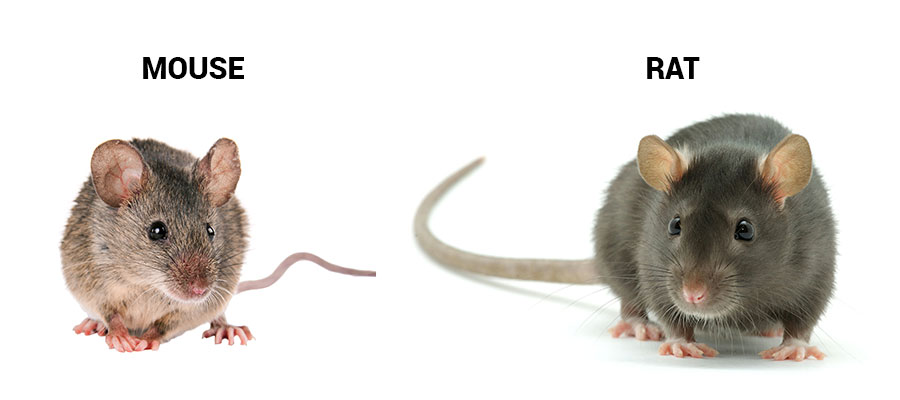
Although rats and mice are both rodents, they differ in several important ways. From their size and appearance to their behavior, these differences can help you identify which one you’re dealing with. The following characteristics can help tell them apart:
Identifying Rats
- Ears and Feet: Rats have relatively small, hairy ears and noticeably larger feet that support their larger body size.
- Droppings: Rat droppings are much larger than mouse droppings, typically measuring 10 to 20 mm in length.
- Reproduction: Rats usually produce 3 to 6 litters per year, with each litter containing up to 10 pups.
- Diet: Rats are opportunistic feeders that consume a wide variety of foods, including meats, grains, seeds, fruits, and other available food sources.
- Size: Depending on the species, rats generally have bodies measuring 6 to 9 inches long, making them much larger than most mice.
Identifying Mice
- Ears and Tail: Mice have relatively large ears and long, thin tails that are more noticeable in proportion to their small bodies.
- Droppings: Mouse droppings are tiny, typically 3 to 6 mm long, with pointed ends that resemble small grains of rice.
- Reproduction: Mice reproduce rapidly, often producing 5 to 10 litters per year, with each litter containing up to 14 pups.
- Diet: Mice are omnivores but primarily feed on seeds, grains, fruits, and other readily available plant-based foods.
- Size: Most mice have bodies measuring 2 to 4 inches long, making them much smaller than rats.
Need a Rodent Exterminators – Rat & Mice Exterminators estimate?
Click the button below to leave your information.

Do You Have Rats or Mice? Watch for These Signs
Rodents rarely stay hidden for long once they’ve entered a home. They often leave behind clues such as scratching sounds, foul odors, chew marks, nests made from shredded materials, burrows, and droppings that make their presence easier to detect. Acting quickly after spotting these signs can help reduce the extent of an infestation.
Beyond the damage they cause, rats and mice can create health concerns by contaminating food and spreading disease-causing organisms. If you suspect rodent activity, contacting your local rodent control professionals is the best way to identify the source of the problem and begin effective treatment.
Rodent Problems? Vermont Pest Control Can Help
Think you may have rats or mice inside your home? We are here to help at Vermont Pest Control. Our goal is to protect our customers from the dangers rodents can bring while providing effective and dependable control solutions.
Homeowners in Vermont can rely on our team to identify rodent activity and determine the species involved. We take the time to understand each situation and create a customized approach to help restore comfort and confidence in your home.
Contact Vermont Pest Control today to schedule a rodent inspection and learn how our team can help protect your home from unwanted pests.


